Physical Address
304 North Cardinal St.
Dorchester Center, MA 02124
Physical Address
304 North Cardinal St.
Dorchester Center, MA 02124

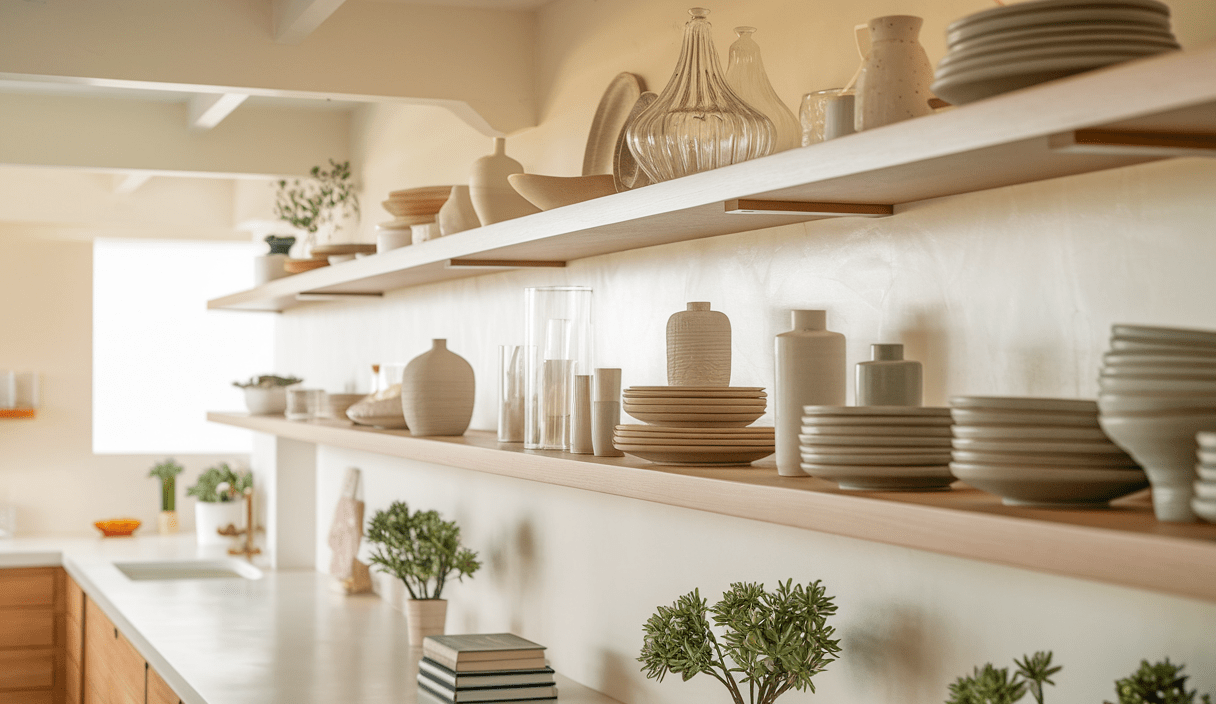
How to Style Open Shelves Like a Pro is easier than it looks. With a few simple rules and a clear plan you can turn bare boards into curated displays that feel balanced, functional, and personal. This guide walks you through practical styling steps, layouts, and shopping tips so you can style open shelves confidently.

Open shelving adds air and accessibility to kitchens, living rooms, and bathrooms. But, when left unstyled, they can look cluttered or incomplete. With intentional styling you highlight favorite objects, keep the space usable, and create a cohesive visual story.
Below are the rules I use every time I style open shelving. Follow them in order and you’ll avoid common missteps.
Less is more. Remove anything that’s chipped, mismatched, or doesn’t belong. Aim to leave some negative space — empty zones let your eye rest and make focal pieces pop.
Group objects in odd numbers and vary heights: tall vase, medium stack of books, small bowl. Place some items slightly in front of others to create depth. Use risers or stacked books to lift smaller pieces.
Balance heavier, darker objects with lighter ones across the shelf. If one side feels heavy, shift a piece or add a plant to the other side until the composition feels even.

Use both vertical rows and horizontal stacks of books. According to experts at West Elm, mixing vertical rows with horizontal stacks creates rhythm and gives space for accessories.
Choose a palette of 2–3 repeating colors and 2–3 materials (wood, glass, metal). Repetition ties disparate items together and makes the shelves look intentional.
Open shelves should be pretty and useful. Store daily dishes or frequently used cookbooks within easy reach, and reserve decorative-only pieces for higher or less-used shelves.
Refresh one shelf per season. Swapping a vase, a piece of art, or a small textile keeps the display feeling fresh without a total overhaul.

Follow this simple process when you stand in front of your shelves.
In the kitchen, combine functional items (good-looking plates, cutting boards) with decorative pieces (vase, a framed print). Avoid overcrowding — you want plates to be easy to grab.
For living rooms, mix books, framed photos, a plant, and one or two art objects. Emily Henderson’s guide to bookcases and open shelving shows how different styles can work — from minimalist to curated maximalist. See more at Style by Emily Henderson.
Keep towels neatly folded or rolled, use baskets for small items, and reserve a shelf for a scented candle or small greenery. The goal here is spa-like calm.
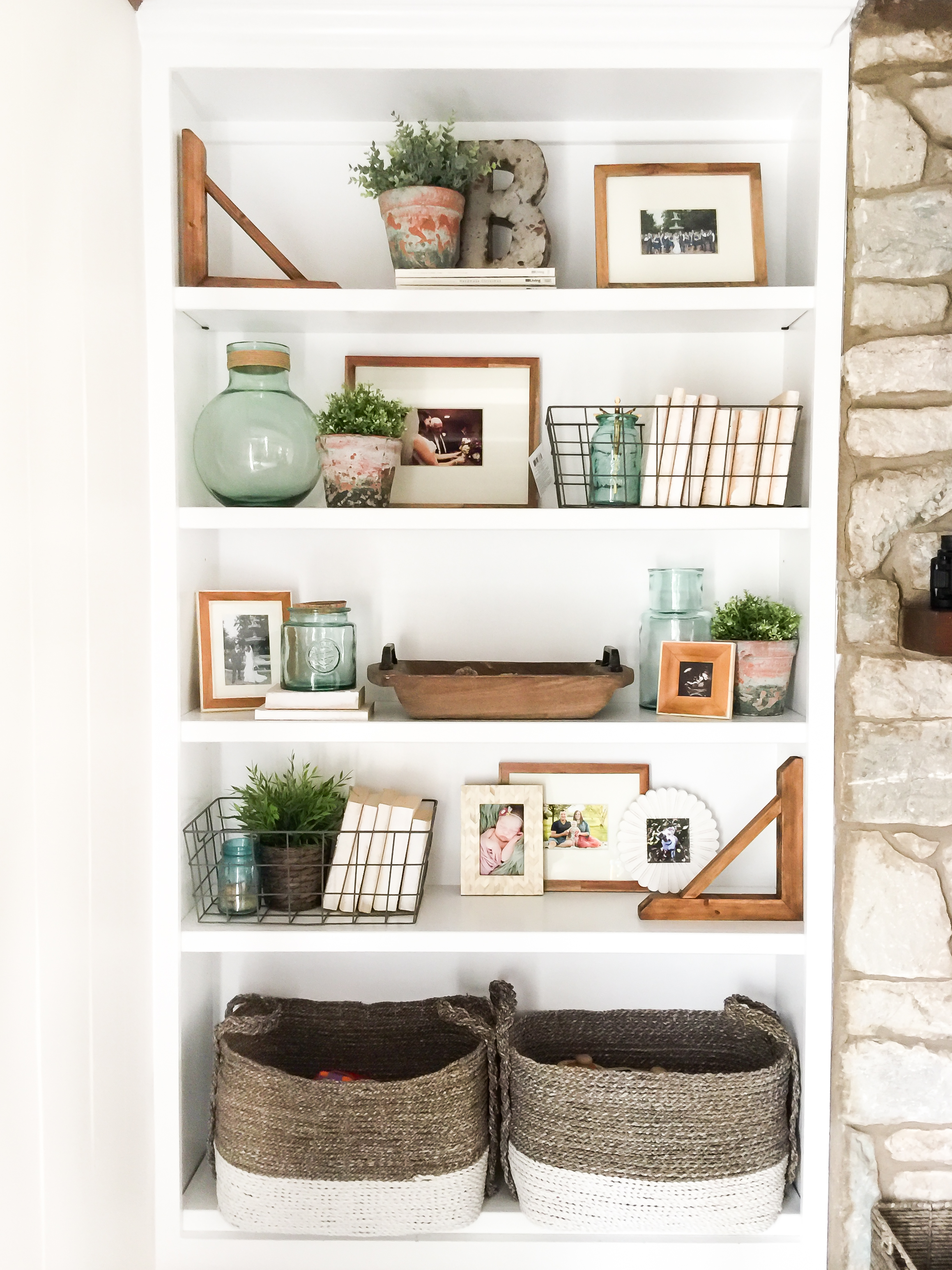
If your shelves look off, try these fixes.
Neutral palettes photograph well and feel timeless. Natural materials — wood, stone, linen — add warmth and texture. For pops of color, repeat one accent color across the shelves rather than scattering many hues.

If you want step-by-step visuals and professional tips, these articles are helpful:
Prefer video? Watch this short walkthrough that highlights practical styling tips and real-time edits.
Use this checklist before you call a shelf finished:
Remember: styling open shelves is part art and part editing. Keep practicing, and don’t be afraid to refresh pieces seasonally. If you want another perspective, Gravellane Design suggests alternating between decorative and functional items to keep shelves useful and pretty.
When you apply the core rules — edit, layer, balance, and repeat — you’ll see a big difference fast. Keep the process simple: edit first, anchor second, and style last. And remember to let your personality show through a few curated objects.
Motivating close: Ready to transform your shelves? Try styling one shelf this weekend using the checklist above — you’ll be surprised how much impact a small, deliberate edit makes. For more home styling guides, explore the library at zenpulsehub.com and keep experimenting.
Restyle seasonally or whenever your space starts to feel stale. Swapping a few items quarterly keeps the display fresh without a full overhaul.
Yes. Open shelves can make a small kitchen feel larger if you keep them tidy, use a limited palette, and avoid overcrowding the shelves.
Large items like a framed print, a tall vase, or a stack of beautifully bound books work well as anchors. Use two to three anchors per shelf and build around them.
Mix function with decor: place everyday items within reach, use matching containers for small items, and leave negative space so the shelves don’t feel cluttered.