Physical Address
304 North Cardinal St.
Dorchester Center, MA 02124
Physical Address
304 North Cardinal St.
Dorchester Center, MA 02124

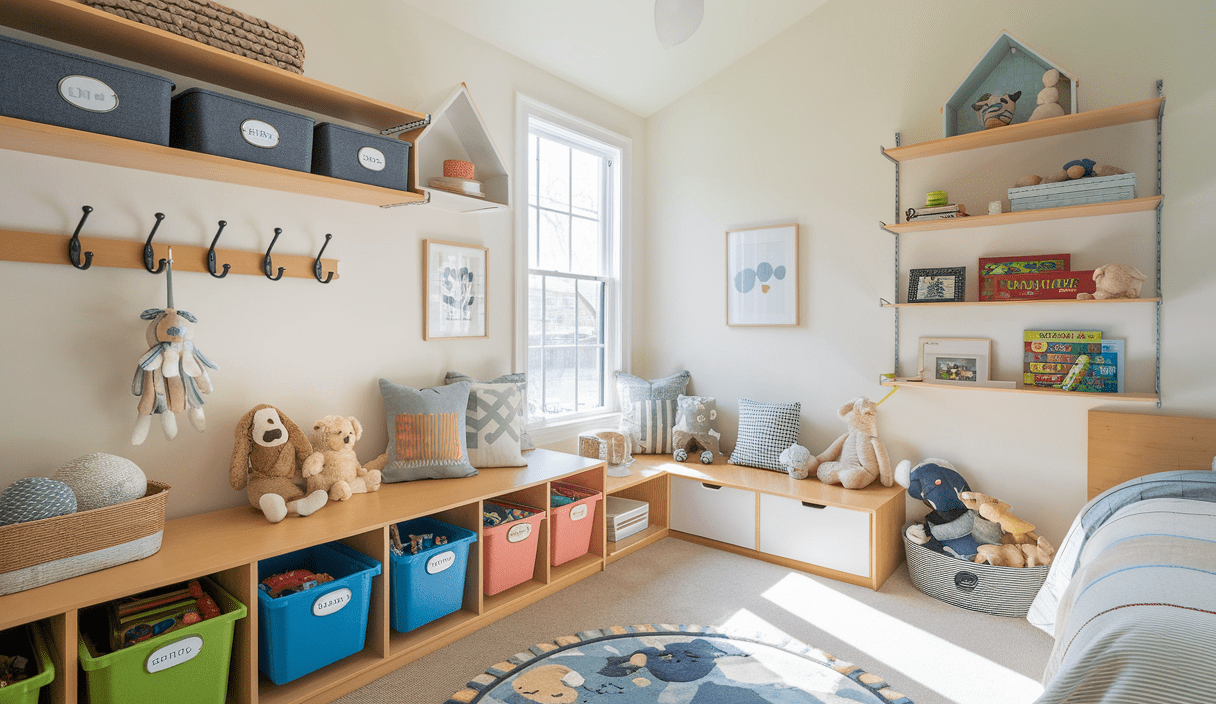
Smart Storage Ideas for Kids’ Rooms can turn clutter into calm quickly. If you want a playful, tidy space that your child can use and maintain, the right storage plan makes all the difference. This guide shares practical, budget-friendly solutions and design tips to create a neat, functional bedroom your kid will love.
:strip_icc()/Kids-room-shelf-storage-DHXLtinwa0vAwx8VsHWuqk-9179766d229a458f8d0dad7cbd0df543.jpg)
Kids’ rooms are busy places. Toys, books, clothes, and art supplies can pile up fast. Thoughtful storage does more than hide mess — it teaches kids to sort, choose, and take responsibility. With a few smart moves, you can create zones that are easy to use and simple to keep tidy.
Before you buy bins or build shelves, follow these guiding principles:
Divide the room into clear areas: sleep, read, play, and get-ready. Zoning keeps activities contained and makes cleanup part of the routine.
:max_bytes(150000):strip_icc()/Arlo-Big-Kid-Room-Tour-8-240533444b22424f8636aaafbee631f9.jpeg)
Below are smart storage options that fit most budgets and room sizes. Mix and match to suit your child’s age and habits.
Under-bed storage uses wasted space. Choose rolling drawers or clear bin systems so kids can pull out toys and clothes independently. This is great for seasonal items, extra bedding, and puzzles.
Low cubbies let kids access toys and books without help. Use fabric drawers in cubby units for smaller toys and open shelves for books and special items. Label each bin with words or pictures for younger children.
Vertical storage clears floor space. Floating shelves show off favorites while pegboards hold baskets, small shelves, and hooks for flexible arrangement. Pegboards are great for craft supplies and rotating displays.
Choose beds with built-in drawers, benches with storage, or desks with shelving. These pieces save room and reduce the number of separate storage items you need.
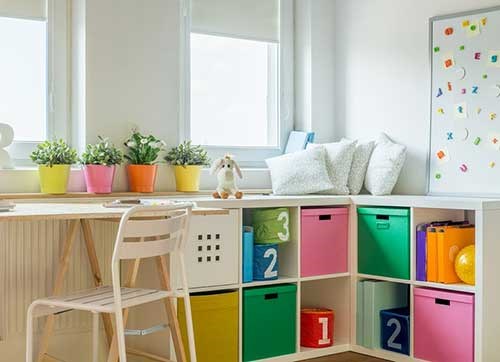
Clear bins let kids see what’s inside quickly; baskets provide a softer look. Use small baskets inside cubbies for toys and larger clear tubs for blocks or stuffed animals.
Install hooks at child height for jackets, costumes, and bags. Over-the-door shoe organizers are perfect for small toys, art supplies, or hair accessories.
Rolling carts are portable activity stations. Move them to the play area, then roll them away when it’s time to sleep. They work well for art supplies, LEGOs, or dress-up items.
Storage works best when paired with simple routines. Here are easy habits to build:
Limit what’s available at once. Store the rest and rotate monthly. This keeps toys fresh and cuts mess. You can read practical rotation ideas from a mom-tested guide at Just a Girl and Her Blog, which lists methods like decluttering often and creating zones.
:strip_icc()/Kids-bedroom-storage-30-1faNiKFN9jdYHfU9m1s-098ec3939dd7496c8c8c1dd2933f1347.jpg)
Smart storage doesn’t have to cost a lot. Try these affordable projects:
For more clever and stylish ideas that clear clutter, check this list of clever kids’ room storage ideas at No Space Like Home.
Face-out book displays encourage reading. Low, face-out shelves make books easy to choose and return.
Use low rods for daily outfits and higher rods for grown-up storage. Drawer dividers keep socks and small items tidy.
Small parts need containment. Use compartment boxes, bead organizers, or tackle boxes. A dedicated LEGO mat with edges that fold into a bag makes cleanup fast.
Install furniture anchors on tall shelving and secure floating shelves properly. Choose rounded corners on tables and soft baskets where possible. Plan storage that grows with your child: adjustable shelves and modular systems are worth the investment.
If you want a curated roundup of storage solutions and decor, Better Homes & Gardens has a helpful storage guide that covers tackling toy chaos and practical layouts: BHG Storage Solutions. For DIY-focused images and ideas, Pinterest remains a rich visual resource (see this idea board).
If you’re shopping for room-specific items, some product pages show practical setups for boy room organization and playroom storage that can spark fresh setups: boy room organization ideas.

Watch the short demonstration below for hands-on examples and setup inspiration.
Plan storage that adapts. Adjustable shelving, multi-size bins, and modular furniture can shift as kids grow. Keep a donate box in the closet to make decluttering regular and painless.
If you’re short on time or dealing with a larger remodel, consider professional organizers or a closet specialist for a one-time overhaul. Many local pros offer packages to design child-friendly storage systems and install them safely.
Smart Storage Ideas for Kids’ Rooms work best when they are simple, visible, and consistent. Use these ideas to design a room that looks tidy and supports independence.
Begin with a quick declutter. Sort into keep, donate, and toss piles. Then create zones (sleep, play, read) and place storage where kids can reach it. Use labeled bins and a five-minute daily tidy to maintain order.
Compartment organizers, tackle boxes, and clear plastic bins are ideal. For playtime, use a LEGO mat that folds into a bag to contain pieces and speed cleanup.
Keep storage accessible and labeled, make cleanup short and game-like (set a timer), and rotate toys to reduce overwhelm. Praise effort and make tidy routines consistent.
Check blog roundups like Just a Girl and Her Blog, photo-heavy guides from BHG, and curated inspiration on Pinterest for visuals and step-by-step DIYs.
Ready to create a calm, joyful space? Try one smart change this week and watch the difference. For more guides and room-by-room tips, explore more at zenpulsehub.com and keep building a home that breathes.