Physical Address
304 North Cardinal St.
Dorchester Center, MA 02124
Physical Address
304 North Cardinal St.
Dorchester Center, MA 02124

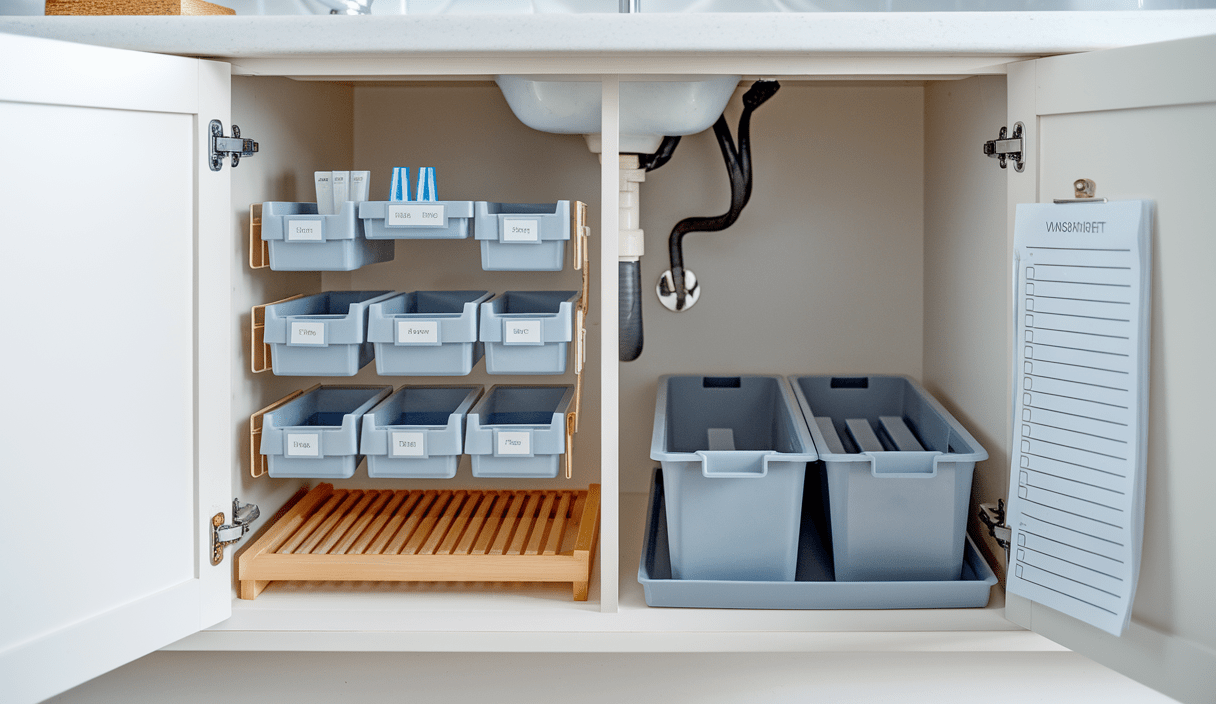
Under-the-Sink Storage Organization Guide helps you reclaim wasted space, protect supplies, and make everyday routines easier. In this practical, step-by-step guide you’ll learn how to sort, choose, and install smart organizers, plus safety tips and product ideas to get a tidy cabinet fast.

Most people stash cleaning sprays, sponges, and random odds-and-ends under the sink until the cabinet becomes a jumble. Organized under-sink storage saves time, prevents spills, and keeps hazardous cleaning products contained. It also makes small kitchens feel larger by using awkward vertical space efficiently.
Follow this quick plan to transform the space:
Start by emptying the cabinet completely. As you sort, ask these questions:
Important safety note: medical and surgical supplies shouldn’t be stored under sinks. The Joint Commission and CDC-related guidance caution against storing medical items in damp cabinet areas where contamination risk is higher. See the guidance here: Joint Commission guidance.
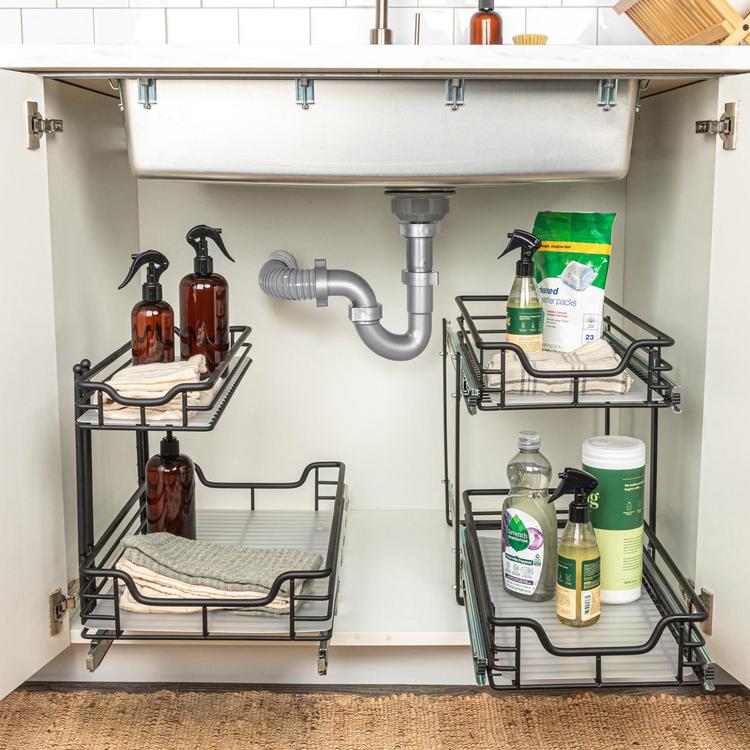
Accurate measurements avoid returns and frustration. Measure:
Sketch a quick map and mark where the pipes and disposal sit. This helps you choose items like pull-out shelves or tiered risers that fit around obstacles.
There are many useful organizers. Mix and match as needed:
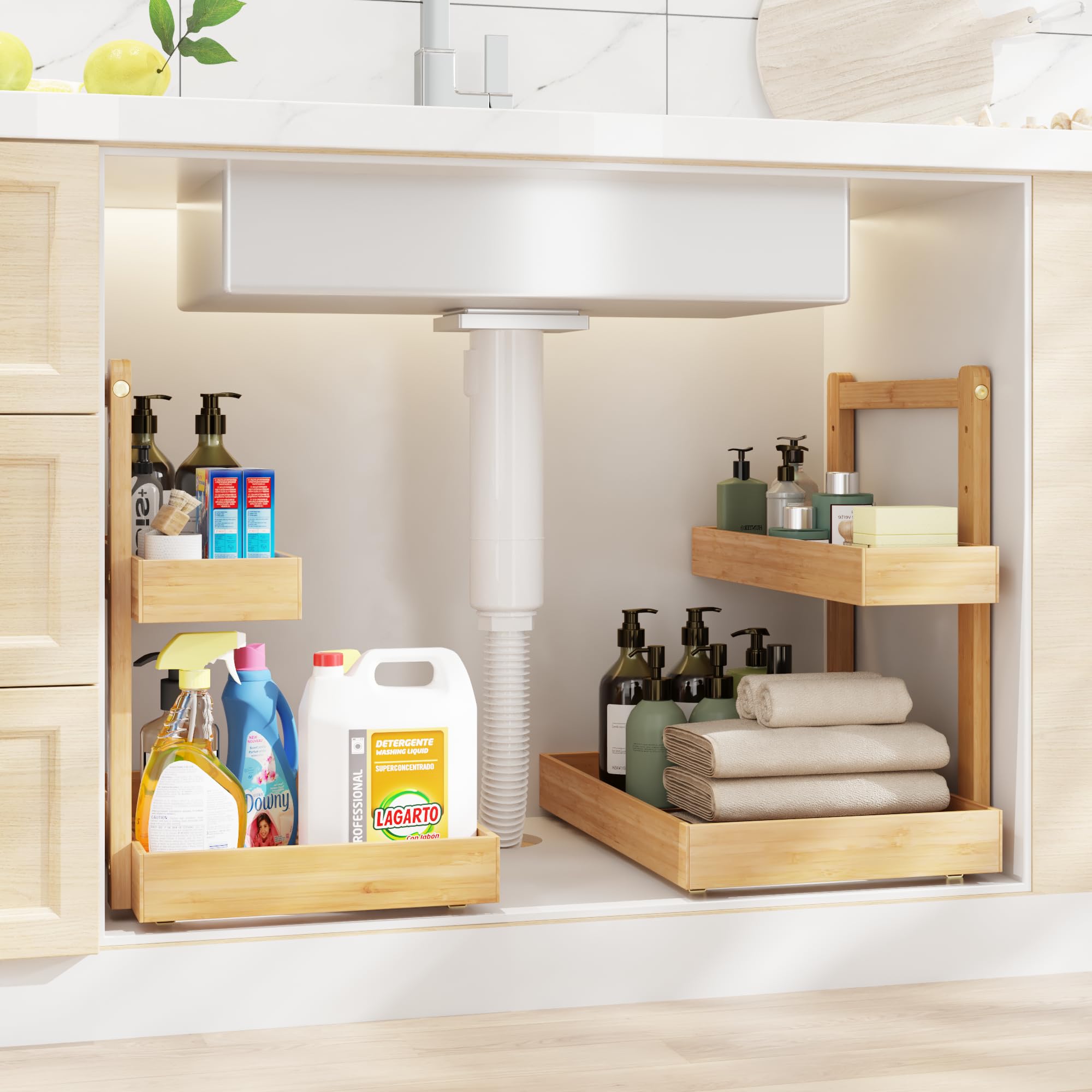
Keep like items together: all-purpose cleaners, glass cleaners, dish soaps, sponges, and trash bags. Place hazardous chemicals in a separate, labeled bin and keep them out of reach of children.
Lay down a wipeable liner or waterproof mat to catch drips. This prevents wood damage and makes cleanup easy.
Follow manufacturer instructions for any hardware. For no-drill options, use freestanding shelving or tension-fit organizers. If you have a garbage disposal or odd plumbing layout, choose organizers with open backs or adjustable sides.
Place daily items front and center; store seasonal or rarely used products at the back or on higher shelves.
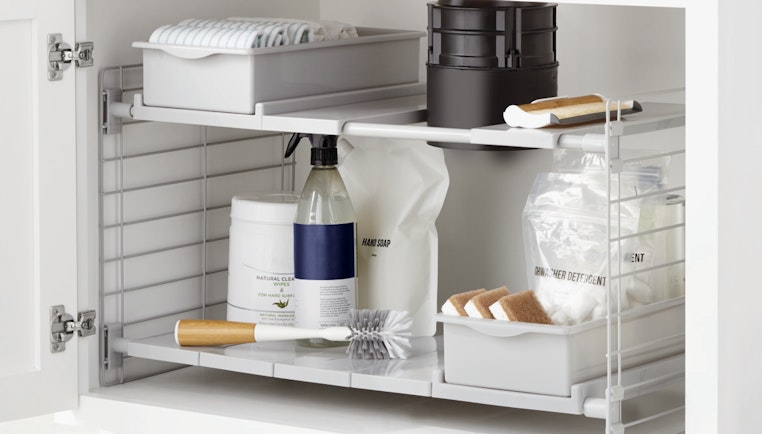
Here are some product types and when to use them:
For inspiration and detailed project photos, check Designthusiasm’s under-sink storage guide: Designthusiasm. If you want recycling and dedicated waste solutions under the sink, Blanco shows several bin and pull-out configurations that fit different cabinet layouts: Blanco under-sink organization.

Watch a short demonstration for installation tips and ideas:
Good organization lasts only with small habits. Try these simple routines:
If you want more creative ideas and step-by-step makeovers, The Brain & The Brawn has helpful under-sink storage ideas with removable shelves and bins: Under-sink storage ideas.
A quick budget refresh needs only a couple of plastic bins and a liner. For longer-term solutions, invest in pull-out drawers or custom carpentry. If you’re shopping on Amazon, products like the REALINN pull-out shelf or bamboo two-tier organizers offer a middle-ground of convenience and value: REALINN product.
Before you close the cabinet, run this checklist:
Under-the-Sink Storage Organization Guide is designed to be practical and repeatable: declutter, measure, pick the right organizers, and keep the space maintained. With a little planning, your cabinet can become efficient, safe, and even attractive.
Ready to start? Empty your cabinet now and try one simple change — add a tiered shelf or a pull-out bin. Small upgrades make a big difference.
Conclusion: If you found this guide helpful, explore more organization and home guides at zenpulsehub.com to keep improving your space and routines.
Wipe out the cabinet every 1–3 months and inspect for leaks. Do a deeper declutter twice a year to check expiry dates and reorganize.
No. Keep cleaning chemicals and food separate to avoid contamination. Store chemicals in a labeled bin and away from any food storage areas.
Choose organizers with open backs or adjustable sides. Measure around the pipes and use freestanding units that can be trimmed or repositioned to fit.
Yes. Pull-out shelves greatly improve access, reduce bending, and make it easy to see items stored at the back of deep cabinets.